
Discovering interesting facts for Australia reveals a continent full of extraordinary surprises that challenge everything travellers think they know about this vast land. From wildlife found nowhere else on Earth to geographical oddities that defy logic, Australia stands as one of the planet’s most fascinating destinations. The country’s unique position in the Southern Hemisphere has created ecosystems, cultures, and phenomena that continue to amaze visitors from around the globe.
Australia holds 21 of the world’s 25 most venomous snakes and is the only continent where venomous snakes outnumber non-venomous species, according to Australian Reptile Park biodiversity research conducted in 2024.
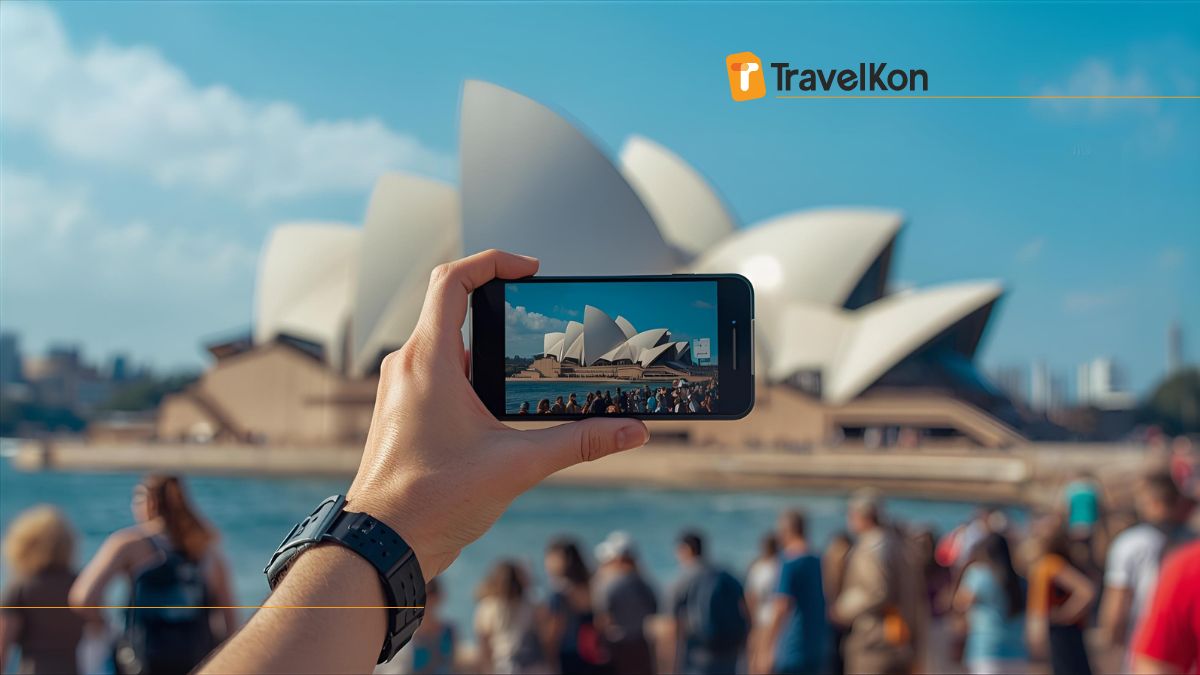

Is an eSIM the Best Option for Travelling in Australia?
Modern travellers exploring Australia’s interesting facts firsthand need reliable connectivity across this massive continent spanning 7.7 million square kilometres. Traditional SIM cards create unnecessary hassles with airport queues, activation delays, and limited coverage across remote regions. An eSIM eliminates these frustrations by providing instant activation and seamless connectivity the moment flights touch down on Australian soil.
TravelKon offers eSIM Australia solutions designed specifically for international visitors requiring dependable data access throughout their Australian adventures. For travellers combining Australia with other destinations, the eSIM Australia & 70 countries coverage provides exceptional value and convenience. Those planning extensive global itineraries benefit from eSIM Australia & 180 global countries coverage, ensuring connectivity across multiple continents without swapping physical cards.
Key advantages of choosing eSIM for Australian travel:
- Instant digital activation without visiting physical shops or waiting for delivery
- Multiple data plans available from short-term tourist packages to extended stay options
- Superior network coverage across major cities and regional areas including the Outback
- Cost-effective compared to international roaming charges from home carriers
- Environmental benefits by eliminating plastic SIM card waste
The eSIM technology proves particularly valuable when travelling between Australian cities or venturing into remote locations where traditional SIM card retailers don’t exist. Digital management through mobile apps allows travellers to monitor data usage, top up plans, and switch between carriers without physical card changes.
Does Australia Really Have More Beaches Than Any Other Country?
Australia boasts an astounding 10,685 beaches stretching across 50,000 kilometres of coastline, making it impossible to visit every beach even with daily trips for 29 years. This remarkable coastal abundance stems from Australia’s island continent status surrounded entirely by ocean. The variety ranges from pristine white sand beaches in Queensland to dramatic cliff-backed shores in Victoria and secluded coves in Tasmania.
Fascinating beach-related facts about Australia:
- Whitehaven Beach in the Whitsundays contains 98% pure silica sand that doesn’t retain heat
- The Great Barrier Reef protects Queensland’s coast whilst creating unique beach ecosystems
- Bondi Beach receives over 2.7 million visitors annually despite being only 1 kilometre long
- Many Australian beaches remain unnamed and completely untouched by human development
- Beach culture influences Australian identity with 85% of the population living within 50 kilometres of the coast
These coastal treasures contribute significantly to Australia’s tourism industry and national lifestyle. Beach access remains largely free and public, reflecting Australian values of egalitarianism and outdoor living. Surf lifesaving clubs patrol popular beaches during summer, making Australian shores among the safest globally.
Why Does Australia Have So Many Deadly Creatures?
Australia’s reputation for dangerous wildlife stems from millions of years of geographical isolation that allowed unique species evolution without external predators. The continent separated from other landmasses approximately 45 million years ago, creating a biological laboratory where venomous defence mechanisms became primary survival strategies. This evolutionary path produced creatures that rely on toxins rather than size or speed for hunting and protection.
Notable deadly Australian wildlife facts:
- Box jellyfish possess enough venom to kill 60 humans within minutes of contact
- Sydney funnel-web spiders can bite through fingernails with fangs larger than brown snake fangs
- Saltwater crocodiles are the world’s largest living reptiles, reaching lengths exceeding 6 metres
- The inland taipan snake’s venom is 50 times more toxic than a cobra’s bite
- Blue-ringed octopuses carry sufficient venom to kill 26 adult humans despite weighing only 100 grams
Despite these frightening statistics, actual fatalities remain remarkably rare due to excellent medical facilities and widespread antivenom availability. Most dangerous creatures inhabit remote areas far from major tourist destinations. Understanding wildlife behaviour and following local warnings ensures safe exploration of Australia’s natural wonders.
How Can Australia Fit All of Europe Inside Its Borders?
Australia’s landmass spans 7,692,024 square kilometres, making it larger than the entire European continent excluding Russia. This extraordinary size creates diverse climate zones from tropical rainforests in the north to temperate regions in the south and vast arid deserts throughout the interior. The distance between Sydney and Perth equals the distance between London and Moscow, illustrating just how massive this island continent truly is.
Mind-boggling size comparisons:
- Texas could fit inside Australia 11 times with room to spare
- The UK fits into Australia 32 times over, making British travellers particularly amazed
- Australia’s largest cattle station, Anna Creek, is larger than Israel
- The Outback covers 70% of Australia’s landmass yet contains less than 5% of the population
- Driving from Australia’s northern tip to southern coast takes approximately 38 hours non-stop
This vast size creates unique challenges for travellers underestimating distances between destinations. Proper planning becomes essential when touring multiple regions during limited holiday periods. Domestic flights often prove more practical than road trips between distant cities, saving valuable time for actual exploration.
Is It True That Australia Has Pink Lakes and They’re Natural?
Australia genuinely possesses naturally pink lakes scattered across the continent, with Lake Hillier in Western Australia being the most famous example. These extraordinary water bodies derive their bubblegum-pink colouration from specific algae species called Dunaliella salina that produce carotenoid pigments in high-salt environments. The phenomenon remains stable year-round, unlike some international pink lakes that change colour seasonally.
Remarkable facts about Australia’s pink lakes:
- Lake Hillier maintains its pink colour even when water is removed and placed in containers
- The lake’s pink hue appears most vibrant when viewed from aerial perspectives
- Scientists confirm the water is safe for swimming despite its unusual appearance
- Salt-loving bacteria called halobacteria contribute additional pink and red pigmentation
- Multiple pink lakes exist across South Australia, Western Australia, and Victoria
These natural wonders attract photographers and nature enthusiasts seeking unique Australian experiences beyond typical tourist attractions. Accessibility varies between different pink lakes, with some requiring 4WD vehicles or scenic flights for optimal viewing. The lakes demonstrate Australia’s capacity to surprise even seasoned travellers with geological phenomena found virtually nowhere else on Earth.
What Makes Australia the Only Country That’s Also a Continent?
Australia holds the unique distinction of being simultaneously a country, continent, and island, creating geographical classification confusion that fascinates cartographers worldwide. This triple identity stems from Australia’s position as the smallest continent yet largest island depending on definitional criteria used. The entire Australian landmass falls under one national government, unlike other continents divided among multiple sovereign nations.
Geographic peculiarities of Australia’s continental status:
- Australia is the flattest continent with an average elevation of only 330 metres
- The continent experiences the lowest rainfall of any inhabited continent globally
- Australia remains the only continent without active volcanoes on its mainland
- The continent drifts northward approximately 7 centimetres annually due to tectonic plate movement
- Australia is the sixth-largest country by total area yet ranks only 55th by population
This continental independence shapes Australian identity and international relations significantly. The isolation fostered unique cultural development and biodiversity unmatched elsewhere globally. Understanding Australia’s geographical uniqueness helps travellers appreciate why the country feels so different from other destinations despite modern globalisation.